Apoptosis signaling pathway
Apoptosis is genetically regulated programmed cell death. Extrinsic (death receptor–DISC–caspase-8) and intrinsic (mitochondrial MOMP–cytochrome c–apoptosome–caspase-9) pathways converge on effector caspases (e.g., caspase-3/7) to cleave substrates and dismantle the cell. It is central to development, immunity, and cancer therapy response or resistance.
1. Key targets
Core nodes
- BCL-2 家族
Pro-apoptotic (BAX, BAK, BH3-only BIM/PUMA/BID) vs anti-apoptotic (BCL-2, BCL-XL, MCL1) proteins set the MOMP threshold.
- Caspase 级联
Initiator caspases-8/9 activate effectors-3/7; cleaved caspase and PARP are common readouts.
- Death receptors & IAPs
Fas, TRAIL-Rs (DR4/DR5), TNFR1 recruit FADD to form DISCs; XIAP and cIAPs modulate caspase activity.
Intrinsic branch
- DNA damage, p53, ER stress upregulate BH3-only proteins
- MOMP → cytochrome c / SMAC release → apoptosome assembly
Extrinsic branch
- Ligand–receptor clustering → DISC → caspase-8 activation
- Type II cells often amplify via tBID / mitochondrial coupling
Supplement: Apoptosis targets (gene symbols)
HGNC symbols grouped by BCL-2 family, caspases, death receptors, apoptosome, and IAP/p53 modules.
BCL-2 family
Death receptors / DISC
2. Suggested experimental readouts
Pair early (membrane asymmetry loss) vs late (DNA fragmentation) readouts; distinguish from necroptosis, pyroptosis, and ferroptosis.
- Cleaved caspase-3 / -8 / -9 (model-dependent)
- Cleaved PARP1; pair with total PARP
- Cytochrome c release (fractionation or IF colocalization)
- Annexin V with 7-AAD or PI flow panel
- DNA fragmentation / TUNEL; nuclear morphology (Hoechst)
- BH3-only proteins BIM / PUMA / NOXA (stimulus-dependent)
3. Extrinsic vs intrinsic: quick comparison
| Feature | Extrinsic | Intrinsic |
|---|---|---|
| Trigger | Death-ligands (FasL, TRAIL, TNF, etc.) | DNA damage, growth-factor withdrawal, ER stress, oncogenic stress |
| Key complex | DISC | Apoptosome (Apaf-1 + Cyt c + caspase-9) |
| BCL-2 family | Often couples to MOMP in type II cells (Bid/tBid) | BH3 competition and BAX/BAK oligomerization drive MOMP |
4. Cancer & therapeutic context
- BCL-2 / BCL-XL / MCL1: High expression antagonizes many cytotoxic drugs; BCL2 inhibitors (e.g., venetoclax) are established in hematologic malignancies.
- cIAP / XIAP: IAP antagonists / SMAC mimetics can sensitize by relieving caspase inhibition or modulating receptor complexes (context-dependent).
- TRAIL 轴: Pro-apoptotic receptor agonism has a long R&D history; resistance often involves FLIP, cIAPs, or mitochondrial thresholds.
Apoptosis-related antibodies (curated)
5. Product lines & on-site search
Primary & phospho antibodies
BAX, BAK, BCL-2, BCL-XL, MCL1, caspase-3/8/9 (including cleaved), PARP, cytochrome c, XIAP, FADD, DR4/DR5, p53—WB/IHC/IF/FC as applicable.
Functional reagents
Recombinant TRAIL / FasL for extrinsic stimulation (per datasheet and ethics); pan-caspase inhibitors as negative controls.
Quick search (site)
6. Inhibitors & tool compounds (summary)
For research use; follow lab SOP, compound datasheets, and ethics approvals.
Pan-caspase inhibitor; validates caspase dependence.
Cell-permeable pan-caspase inhibitor with favorable potency.
Selective BCL-2 inhibitor; hallmark probe in hematologic models.
Multi-target BCL-2/BCL-XL/BCL-W; watch platelet toxicity.
BH3 mimetic tool; often discussed with MCL1 co-targeting.
Promote cIAP degradation or antagonize XIAP; common in combination studies.
7. Pathway schematic
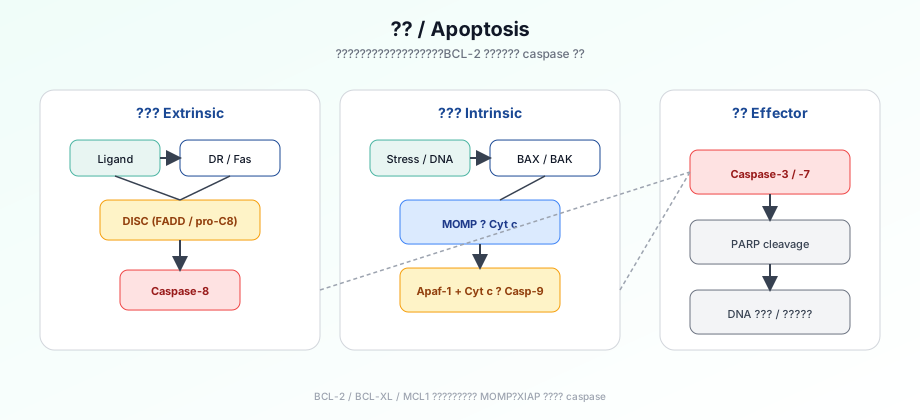
- Extrinsic: ligand–death receptor–DISC–caspase-8
- Intrinsic: stress–BAX/BAK–MOMP–Cyt c–apoptosome–caspase-9
- Effector caspases-3/7 cleave PARP and other substrates
- BCL-2 family and XIAP are major regulatory / resistance nodes
8. Pathway biology overview
Apoptosis removes damaged cells, shapes immune tolerance, and participates in tumor surveillance; solid tumors often evade via upstream rewiring, anti-apoptotic upregulation, or caspase antagonism—interpret alongside autophagy and necroptosis.
- c-FLIP expression can limit full caspase-8 activation at the DISC
- Post-MOMP SMAC/DIABLO and cytochrome c jointly tune IAP and caspase activity
9. Related pathways on this site
10. External databases & modification resources
- KEGG: hsa04210 Apoptosis
- Reactome: Apoptosis
- WikiPathways (search: apoptosis)
- PhosphoSitePlus (caspase / BCL-2 family modification sites)
11. References
Mechanisms & BCL-2 family
- • Adams JM, Cory S. (2007). Nat Rev Cancer. 7(9):680-92.
- • Chipuk JE, et al. (2010). Nat Rev Mol Cell Biol. 11(9):624-36.
Death receptors & caspases
- • Ashkenazi A, Dixit VM. (1998). Science. 281(5381):1305-8.
- • Lavrik IN, Golks A, Krammer PH. (2005). Cell Death Differ. 12(Suppl 2):997-1004.