Notch signaling pathway
(The nav label “Notch Signaling” resolves here.)
NOTCH receptors are single-pass transmembrane proteins classically activated by trans-presented DSL ligands (DLL1/3/4, JAG1/2) on neighboring cells. Ligand engagement triggers metalloprotease S2 cleavage followed by gamma-secretase S3 intramembrane proteolysis to release the Notch intracellular domain (NICD). NICD enters the nucleus with RBPJ (CSL) and MAML co-activators to drive HES/HEY programs—central to fate decisions, tip–stalk angiogenic patterning, immunity, and stem-cell niches; cancers may show NOTCH1 gain/truncation, PEST-domain loss, or ligand-driven microenvironment remodeling.
1. Key targets
Receptor–ligand–protease axis
- NOTCH1–4
EGF repeats mediate ligand engagement; NRR modules gate ADAM accessibility.
- DLL / Jagged
DSL ligand family; Fringe-type glycosylation tunes avidity and strength.
- ADAM10 / ADAM17
S2 shedding yields membrane-tethered NEXT for gamma-secretase.
γ-Secretase complex
- PSEN1 / PSEN2、APH1、PEN2、NCSTN(Nicastrin)
- Intramembrane cleavage releases NICD; also processes APP (off-target note)
Nuclear complex & negative regulation
- RBPJ / CSL + MAML1–3 + NICD
- Numb, Fbxw7, Deltex tune NICD amplitude/turnover
2. Suggested experimental readouts
NICD is short-lived—pair WB with proteasome inhibitors; nuclear fractionation or IF foci help. GSIs affect multiple substrates including APP-CTF.
- Cleaved NOTCH1 (e.g., Val1744 epitopes—clone-dependent), NICD, total NOTCH1
- DLL4, JAG1, DLL1 membrane levels / co-culture models
- HES1/5, HEY1/2 transcriptional readouts
- RBPJ ChIP–qPCR / reporters (project-dependent)
- FBXW7, Numb (negative-regulation context)
3. DLL vs Jagged ligands (overview)
| Ligand class | Examples | Common biology notes |
|---|---|---|
| Delta-like | DLL1, DLL3, DLL4 | Strong lateral inhibition bias; tip–stalk competition in angiogenesis. |
| Jagged | JAG1, JAG2 | Cross-regulates with DLL in stem/TME contexts—strength depends on Fringe/receptor background. |
4. Cancer, vascular & immune context
- T-ALL / NOTCH1: HD or PEST lesions stabilize NICD; FBXW7 loss is a frequent collaborator.
- DLL4–Notch: tumor vasculature tip–stalk programs; anti-DLL4 strategies balance efficacy vs vascular toxicity.
- Immunity & stroma: frequent axis in thymic development, macrophage polarization, CAF crosstalk.
Notch pathway–related antibodies (curated)
5. Product lines & on-site search
Primary & phospho antibodies
NOTCH1–4, cleaved NOTCH1, NICD, DLL1/3/4, JAG1/2, RBPJ, MAML1, HES1/5, HEY1, ADAM10, PSEN1, NCSTN—WB/IF/IHC/FC per datasheet.
Recombinant proteins & reporters
Fc-ligand fusions, reporter lines—availability-dependent; co-culture controls.
Quick search (site)
6. Inhibitors & tool compounds (summary)
Gamma-secretase inhibitors modulate APP processing and can carry CNS toxicity risk; clinical agents are prescription drugs.
Gamma-secretase inhibition—common in vitro Notch blockade.
Clinical/clinical-stage GSIs—see public trial literature.
GSIs with major AD-trial safety lessons—interpret carefully.
ADAM10/17-biased tools for S2-step dissection.
Biologic DLL4/NOTCH programs—availability varies.
MAML–RBPJ-interface stapled peptides (tool-dependent).
7. Pathway schematic
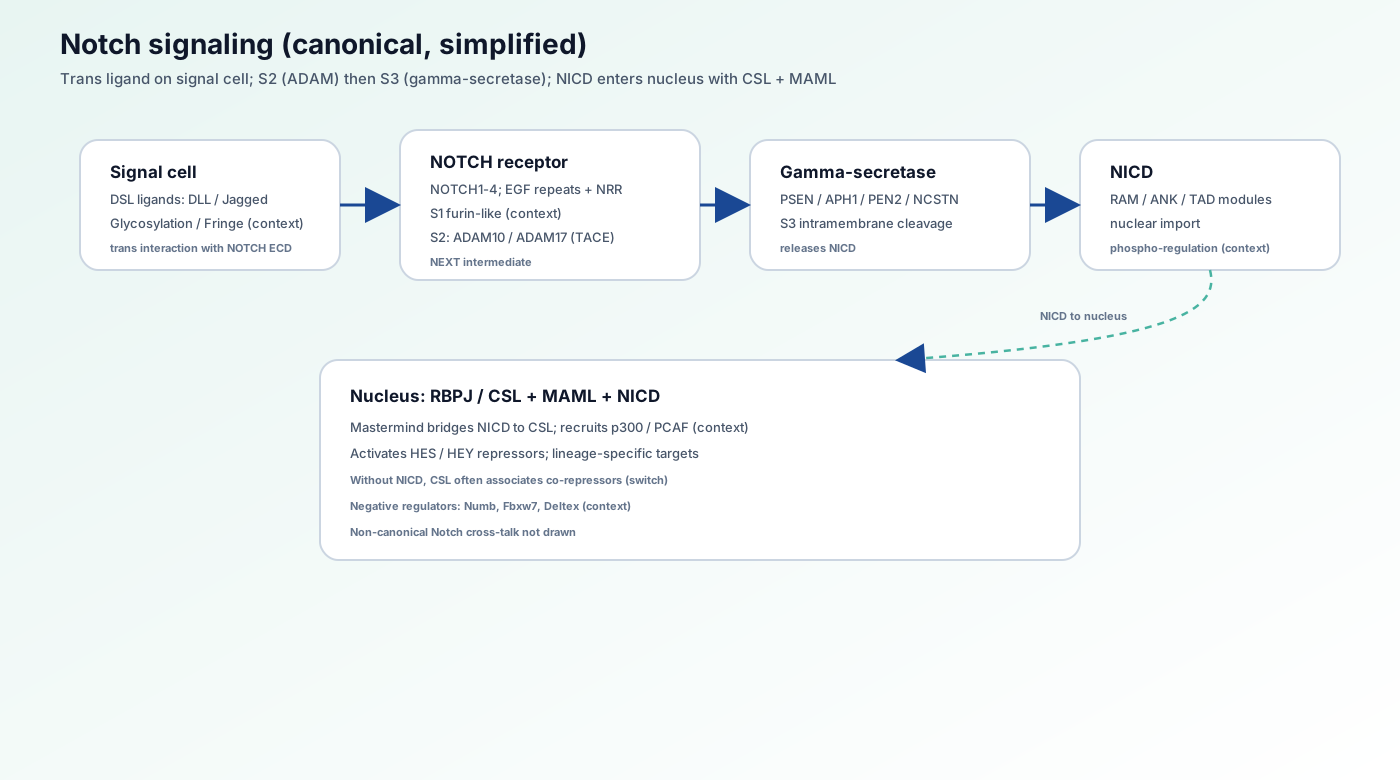
- Trans-presented DSL ligands
- S2: ADAM shedding to NEXT
- S3: gamma-secretase releases NICD
- NICD–RBPJ–MAML drives HES/HEY
8. Pathway biology overview
Notch converts juxtacrine contact into nuclear transcription, underpinning lateral inhibition and lineage boundaries. The same receptor couples to different cofactors and chromatin states—annotate cell type for antibody/ChIP readouts. Non-canonical outputs (membrane-tethered fragments, cross-talk with mTOR, etc.) appear in select models.
- Development: neural, vascular, endodermal patterning
- Homeostasis: niche maintenance and differentiation gradients
9. Related pathways on this site
10. External databases & resources
- KEGG: hsa04330 Notch signaling pathway
- Reactome: Signaling by NOTCH
- WikiPathways (search: Notch)
- PhosphoSitePlus (Notch ICD modification sites)
11. References
Mechanism & reviews
- • Kopan R, Ilagan MX. (2009). The canonical Notch signaling pathway: unfolding the activation mechanism. Cell. 137(2):216-33.
- • Bray SJ. (2016). Notch signalling in context. Nat Rev Mol Cell Biol. 17(11):722-35.
Disease & targeting
- • Aster JC, Pear WS, Blacklow SC. (2017). The varied roles of NOTCH in cancer. Annu Rev Pathol. 12:245-75.
- • Gridley T. (2010). Notch signaling in vascular development and physiology. Development. 137(11):1837-47.