GPCRs and related proteins
G protein-coupled receptors (GPCRs) couple extracellular ligands to heterotrimeric G proteins that regulate effectors such as adenylyl cyclase, phospholipase C, ion channels, and Rho-family modules. GRKs, β-arrestins, and RGS proteins shape kinetics, biased signaling, and desensitization. This network is central to neurotransmitters, hormones, chemokines, and numerous therapeutics.
1. Key targets
Human GPCRs and directly coupled signaling proteins (gene symbols), grouped in Guide to PHARMACOLOGY–style families. Class A covers major aminergic, peptide, lipid/inflammatory, chemokine, and purinergic branches; Classes B/C/F are listed separately. The OR repertoire is summarized (~400 genes); use HGNC / Guide to PHARMACOLOGY for authoritative naming.
1.1 GPCR receptors (by family)
Secretin-family peptide receptors are under Class B; the Class A peptide branch omits symbols duplicated there (e.g., GCGR, GLP1R).
Class A · Aminergic receptors
Monoamine neurotransmitter receptors (5-HT₃ is a ligand-gated channel, not a GPCR).
ADRA1A, ADRA1B, ADRA1D, ADRA2A, ADRA2B, ADRA2C, ADRB1, ADRB2, ADRB3, DRD1, DRD2, DRD3, DRD4, DRD5, HTR1A, HTR1B, HTR1D, HTR1E, HTR1F, HTR2A, HTR2B, HTR2C, HTR4, HTR5A, HTR6, HTR7, HRH1, HRH2, HRH3, HRH4, CHRM1, CHRM2, CHRM3, CHRM4, CHRM5, TAAR1, TAAR2, TAAR5, TAAR6, TAAR8, TAAR9
Class A · Peptide / neuropeptide / peptide-hormone receptors
TACR1, TACR2, TACR3, NTSR1, NTSR2, NMBR, GRPR, BRS3, SSTR1, SSTR2, SSTR3, SSTR4, SSTR5, GHSR, MLNR, HCRTR1, HCRTR2, GALR1, GALR2, GALR3, NPY1R, NPY2R, NPY4R, NPY5R, AGTR1, AGTR2, BDKRB1, BDKRB2, EDNRA, EDNRB, AVPR1A, AVPR1B, AVPR2, OXTR, APLNR, GPR15, GPR35, TRHR, GNRHR, KISS1R, TSHR, FSHR, LHCGR, RXFP1, RXFP2, RXFP3, RXFP4, PROKR1, PROKR2, NMUR1, NMUR2, UTS2R, GPR39, GPR119, CCKAR, CCKBR
Class A · Lipid mediators, eicosanoids, chemokine receptors
S1PR1, S1PR2, S1PR3, S1PR4, S1PR5, LPAR1, LPAR2, LPAR3, LPAR4, LPAR5, LPAR6, PTGDR, PTGDR2, PTGER1, PTGER2, PTGER3, PTGER4, PTGFR, TBXA2R, LTB4R, LTB4R2, CYSLTR1, CYSLTR2, CCR1, CCR2, CCR3, CCR4, CCR5, CCR6, CCR7, CCR8, CCR9, CCR10, CCR11, CXCR1, CXCR2, CXCR3, CXCR4, CXCR5, CXCR6, XCR1, CX3CR1, ACKR1, ACKR2, ACKR3, ACKR4, FPR1, FPR2, FPR3, CMKLR1, GPR32, CNR1, CNR2, GPR55, GPR18, GPR183, GPER1, FFAR1, FFAR2, FFAR3, FFAR4, HCAR1, HCAR2, HCAR3, PTAFR, OXER1
Class A · Purinergic (adenosine & P2Y) receptors
ADORA1, ADORA2A, ADORA2B, ADORA3, P2RY1, P2RY2, P2RY4, P2RY6, P2RY8, P2RY10, P2RY11, P2RY12, P2RY13, P2RY14
Class A · PAR & anaphylatoxin receptors
F2R, F2RL1, F2RL2, F2RL3, C3AR1, C5AR1, C5AR2
Class A · Rhodopsin / opsins, melanocortin, melatonin
RHO, OPN1SW, OPN1MW, OPN1LW, OPN3, OPN4, OPN5, MC1R, MC2R, MC3R, MC4R, MC5R, MTNR1A, MTNR1B
Class A · Opioid & MAS-related receptors
OPRM1, OPRD1, OPRK1, OPRL1, MAS1, MRGPRD, MRGPRE, MRGPRF, MRGPRG, MRGPRX1, MRGPRX2, MRGPRX3, MRGPRX4
Class A · Orphan / GPR family (selected; see HGNC / Guide to PHARMACOLOGY for full lists)
Many GPR-prefixed receptors remain poorly annotated; representative symbols for search are listed.
GPR1, GPR3, GPR4, GPR6, GPR12, GPR15, GPR17, GPR18, GPR19, GPR20, GPR21, GPR22, GPR25, GPR26, GPR27, GPR31, GPR32, GPR33, GPR34, GPR35, GPR37, GPR37L1, GPR39, GPR45, GPR50, GPR52, GPR55, GPR61, GPR62, GPR63, GPR65, GPR68, GPR75, GPR78, GPR83, GPR85, GPR87, GPR88, GPR101, GPR107, GPR108, GPR119, GPR132, GPR135, GPR137, GPR139, GPR141, GPR142, GPR143, GPR146, GPR148, GPR149, GPR150, GPR151, GPR152, GPR153, GPR156, GPR157, GPR158, GPR160, GPR161, GPR162, GPR171, GPR173, GPR174, GPR176, GPR179
Class A · Olfactory & taste-related GPCRs (summary)
~400 human OR genes; taste GPCRs include TAS2R bitter receptors; functional studies often use representative members.
TAS2R1, TAS2R3, TAS2R4, TAS2R5, TAS2R7, TAS2R8, TAS2R9, TAS2R10, TAS2R13, TAS2R14, TAS2R16, TAS2R19, TAS2R20, TAS2R31, TAS2R38, TAS2R39, TAS2R40, TAS2R41, TAS2R42, TAS2R43, TAS2R46, TAS2R50, TAS2R60, TAS1R1, TAS1R2, TAS1R3, OR gene family (~400 OR genes, e.g. OR1A1 … OR14J1 — see HGNC / Ensembl)
Class B · Secretin family (peptide hormone receptors)
GCGR, GIPR, GLP1R, GLP2R, GCG, SCTR, VIPR1, VIPR2, ADCYAP1R1, CRHR1, CRHR2, PTH1R, PTH2R, CALCR, CALCRL, BRS3
Class B · Adhesion GPCRs (ADGR family)
~33 human adhesion GPCRs, predominantly ADGR-prefixed.
ADGRA1, ADGRA2, ADGRA3, ADGRB1, ADGRB2, ADGRB3, ADGRL1, ADGRL2, ADGRL3, ADGRL4, ADGRE1, ADGRE2, ADGRE3, ADGRE4P, ADGRE5, ADGRF1, ADGRF2, ADGRF3, ADGRF4, ADGRF5, ADGRG1, ADGRG2, ADGRG3, ADGRG4, ADGRG5, ADGRG6, ADGRG7, ADGRD1, ADGRD2
Class C · Metabotropic glutamate, GABAB, taste, calcium-sensing
GRM1, GRM2, GRM3, GRM4, GRM5, GRM6, GRM7, GRM8, GABBR1, GABBR2, CASR, GPRC6A, TAS1R1, TAS1R2, TAS1R3
Class F · Frizzled & Smoothened
FZD1, FZD2, FZD3, FZD4, FZD5, FZD6, FZD7, FZD8, FZD9, FZD10, SMO
1.2 Heterotrimeric G proteins & regulators
Major Gα, Gβ, and Gγ genes; GRKs, arrestins, RGS proteins, and selected trafficking/scaffold accessories.
Heterotrimeric G proteins · Gα subunits
GNAS, GNAL, GNAI1, GNAI2, GNAI3, GNAO1, GNAZ, GNAT1, GNAT2, GNAT3, GNAQ, GNA11, GNA14, GNA15, GNA12, GNA13
Heterotrimeric G proteins · Gβ / Gγ subunits
GNB1, GNB2, GNB3, GNB4, GNB5, GNG1, GNG2, GNG3, GNG4, GNG5, GNG6, GNG7, GNG8, GNG9, GNG10, GNG11, GNG12, GNG13, GNGT1, GNGT2
GPCR kinases & arrestins
GRK1, GRK2, GRK3, GRK4, GRK5, GRK6, GRK7, ARRB1, ARRB2, SAG
RGS family (GTPase-accelerating proteins for Gα)
RGS1, RGS2, RGS3, RGS4, RGS5, RGS6, RGS7, RGS8, RGS9, RGS10, RGS11, RGS12, RGS13, RGS14, RGS16, RGS17, RGS18, RGS19, RGS20, RGS21, RGS22
Accessory & trafficking regulators (examples)
RAMP1, RAMP2, RAMP3, MRAP, MRAP2, GIPC1, GIPC2, GIPC3, NHERF1, NHERF2, NHERF3, NHERF4, RIC8A, RIC8B, GPSM1, GPSM2, GPSM3, LGN, PLEKHG2, PLEKHG3, PLEKHG4, PLEKHG5, PLEKHG6
1.3 Common downstream effectors (gene level)
Adenylyl cyclases, PLCβ, Gβγ-regulated K⁺ channels, selected TRPCs and Rho-module proteins—interpret with cell context and coupling bias.
Common downstream effectors (G protein–coupled readouts)
ADCY1, ADCY2, ADCY3, ADCY4, ADCY5, ADCY6, ADCY7, ADCY8, ADCY9, ADCY10, PLCB1, PLCB2, PLCB3, PLCB4, PIK3CG, KCNJ3, KCNJ5, KCNJ6, KCNJ9, TRPC1, TRPC3, TRPC4, TRPC5, TRPC6, TRPC7, ARHGEF1, ARHGEF2, ARHGEF11, ARHGEF12, RHOA, RHOB, RHOC, ROCK1, ROCK2
Core concepts (quick recap)
- GPCRs: ~800 human protein-coding genes including ORs; mind splice isoforms and dimers for pharmacology/antibodies.
- G proteins: Gα subfamilies set primary branches; Gβγ regulates channels and kinases.
- GRKs / β-arrestins / RGS proteins: desensitization, endocytosis, biased signaling, and termination.
2. Suggested experimental readouts
For phospho/conformational antibodies, pair totals, subcellular fractionation, and pharmacological probes; for BRET/BiFC, control expression and spectral bleed-through.
- Surface expression: flow cytometry / surface biotinylation / confocal (recycling vs degradation)
- GRK / β-arrestin recruitment: colocalization, NanoBiT/BRET (model-dependent)
- Second messengers: cAMP (FRET/ELISA), Ca²⁺ imaging, IP₁/IP₃ readouts
- ERK/Akt phosphorylation: time courses with G-family tool compounds
- Desensitization: receptor endocytosis; β-arrestin–GPCR complex kinetics
3. G protein families vs canonical effectors
| Family | Example Gα | Common effectors | Notes |
|---|---|---|---|
| Gs | GNAS | AC ↑ → cAMP ↑ | Cholera toxin ADP-ribosylates Gαs (classic probe). |
| Gi/o | GNAI1/2/3 | AC ↓; some Gβγ → channels | Pertussis toxin (PTX) blocks Gi/o coupling (isoform-dependent). |
| Gq/11 | GNAQ / GNA11 | PLCβ → IP₃ / DAG | Extensive crosstalk with Ca²⁺ mobilization and PKC modules. |
| G12/13 | GNA12 / GNA13 | RhoGEFs → Rho/ROCK | Common in barrier, migration, and matrix-remodeling contexts. |
4. Biased signaling, desensitization, and pharmacology
- Biased ligands: one receptor can favor G protein vs β-arrestin programs—use multiplexed readouts.
- GRK / β-arrestin: link to endocytosis, MAPK scaffolding, and non-canonical programs; isoform/tissue dependent.
- RGS: shorten Gα-GTP lifetime; intersect neuroscience, CV, and TME topics (project-dependent).
GPCR & related protein antibodies (curated)
5. Product lines & on-site search
Primary & phospho antibodies
GPCRs, Gα/β/γ, GRKs, β-arrestins, RGS proteins; validate phospho/intracellular epitopes per clone—WB/IHC/IF/FC as applicable.
Recombinant proteins / ligand tools
Soluble chemokines/neuropeptides for stimulation—mind species cross-reactivity and off-target receptors.
Functional reagents
PTX, cholera toxin, and other classic G-protein probes—follow datasheet concentrations and incubation.
Quick search (site)
6. Inhibitors & tool compounds (summary)
For research use; follow lab SOP, compound datasheets, and ethics approvals.
ADP-ribosylates Gi/o α; blocks Gi/o-coupled receptor outputs.
ADP-ribosylates Gαs → elevated cAMP; common in epithelial models.
Small-molecule Gαq/11 inhibitors (verify selectivity per datasheet).
Polypharmacology probes for P2Y/G-protein contexts (off-targets).
β-adrenergic antagonists/controls (subtype-selectivity varies).
Example mGluR1 antagonists (class C GPCR tools).
7. Pathway schematic
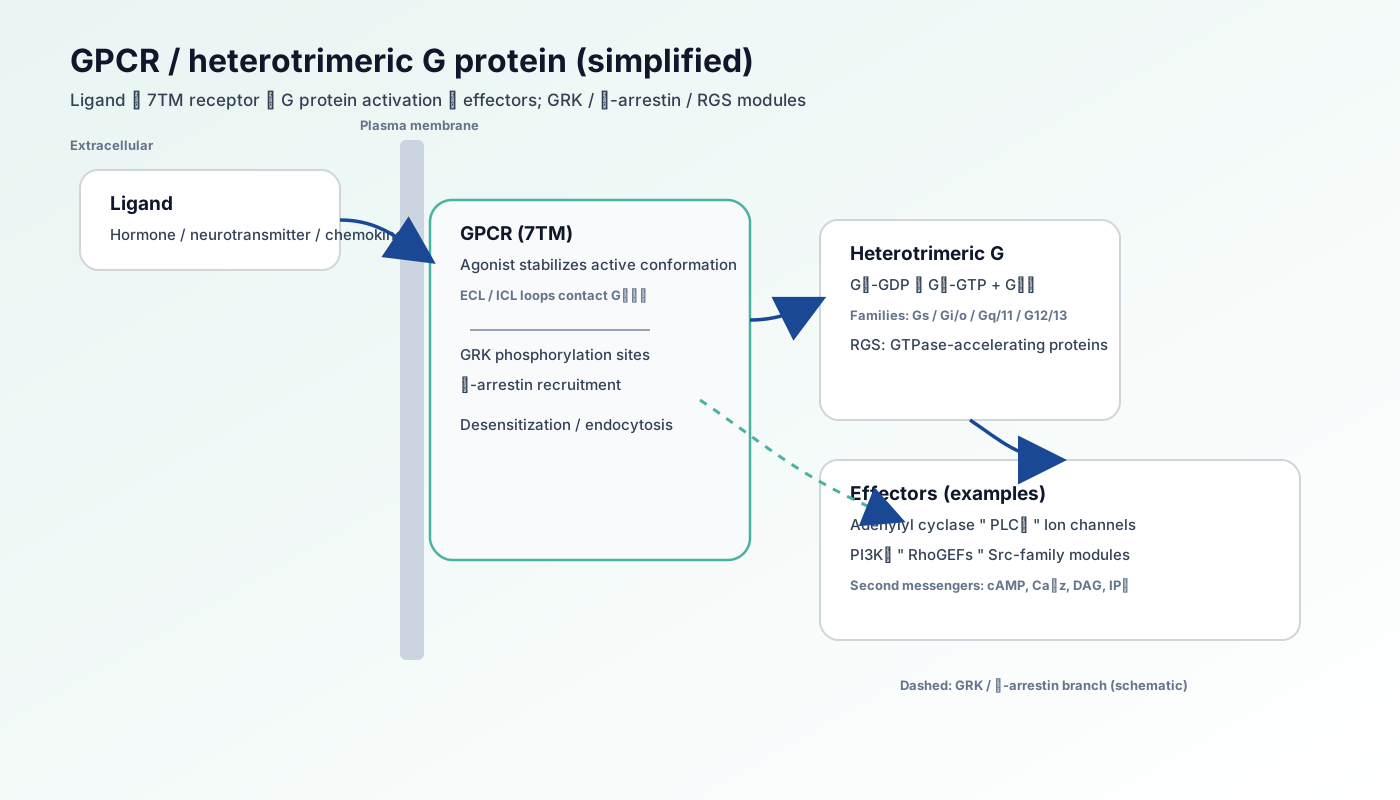
- Ligand binding → receptor conformation and G protein GDP/GTP exchange
- Gα-GTP and free Gβγ regulate effectors
- GRK phosphorylation → β-arrestin recruitment & desensitization/endocytosis
- RGS proteins accelerate GTP hydrolysis to terminate signaling
8. Pathway biology overview
GPCR networks govern autonomic, neuropsychiatric, metabolic, and chemotactic programs; pharmacogenetics and biased ligands reshape therapeutic windows. Experiments should consider receptor reserve, desensitization, and splice isoforms.
- Oncology: chemokine axes, lysophospholipid receptors, immune infiltration
- Metabolism: GLP-1R, GPR family, gut–islet crosstalk
9. Related pathways on this site
10. External databases & modification resources
- IUPHAR / Guide to PHARMACOLOGY (receptor & ligand nomenclature)
- KEGG: hsa04030 G protein-coupled receptors
- Reactome: GPCR downstream signalling
- PhosphoSitePlus (receptor & scaffold modifications)
11. References
G proteins & effectors
- • Oldham WM, Hamm HE. (2008). Nat Rev Mol Cell Biol. 9(1):60-71.
- • Wettschureck N, Offermanns S. (2005). Physiol Rev. 85(4):1159-204.
Biased signaling & structure
- • Smith JS, et al. (2018). Pharmacol Rev. 70(3):527-565.
- • Hauser AS, et al. (2017). Nat Rev Drug Discov. 16(12):829-842.