Endoplasmic reticulum stress & the unfolded protein response (UPR)
When folding demand exceeds ER capacity—nutrient stress, calcium dyshomeostasis, or glycosylation defects—misfolded proteins accumulate and trigger the UPR. PERK–eIF2α–ATF4, IRE1α–XBP1, and ATF6 arms sense load and reprogram translation, ERAD, and transcription to restore proteostasis; chronic hyperactivation couples to CHOP-driven apoptosis, autophagy, and inflammation.
1. Key targets
UPR sensors & branches
- PERK / EIF2AK3
Transmembrane kinase; phosphorylates eIF2α to attenuate global translation while favoring ATF4.
- IRE1α / ERN1
Kinase/RNase; splices XBP1 to XBP1s; RIDD degrades select ER-localized mRNAs.
- ATF6
Golgi proteolysis releases an active fragment upregulating chaperones and ERAD components.
Chaperones & folding QC
- BiP / GRP78(HSPA5);Calnexin / Calreticulin 糖蛋白折叠周期
- PDI family, ERdj co-chaperones, ERAD (e.g., SEL1L–HRD1)
Downstream transcription & fate
- ATF4、CHOP(DDIT3)、XBP1s 驱动的恢复或促凋亡程序
- Crosstalk with NF-κB, MAPK, autophagy (e.g., BECN1 context)
Supplement: ER-stress targets (gene symbols)
HGNC symbols for UPR sensors, chaperones/ERAD, integrated stress, and downstream outputs.
Chaperones & ERAD
2. Suggested experimental readouts
For inducers (e.g., thapsigargin), titrate dose and time; for phospho-antibodies, pair totals and kinase-inhibitor controls.
- p-PERK, p-eIF2α (Ser51), total PERK / eIF2α
- XBP1s (RT-PCR or protein); IRE1α oligomerization / phospho (model-dependent)
- ATF4 and CHOP nuclear accumulation; cleaved ATF6(N) (shift/IF)
- BiP/GRP78 induction; ERAD gene panels (EDEM, HERPUD1, etc.)
- Caspase-3/7, PARP cleavage—pair with apoptosis endpoints
3. UPR branch comparison
| Arm | Sensor | Key outputs | Notes |
|---|---|---|---|
| PERK | EIF2AK3 | p-eIF2α → ATF4 → CHOP | ISRIB-class tools modulate integrated stress readouts. |
| IRE1α | ERN1 | XBP1s;RIDD | IRE1 RNase inhibitors for branch specificity. |
| ATF6 | ATF6(全长 ER 膜) | Golgi cleavage → nuclear transcription | Often parallels chaperone/ERAD induction. |
4. Physiologic & pathologic context
- Secretory & plasma cells: Adaptive UPR under high secretory load; XBP1s dependencies in secretory cancer states.
- Metabolism & obesity: Hepatocyte/adipocyte ER stress links to insulin resistance and lipotoxicity.
- Neurodegeneration: Protein aggregates and chronic UPR; branch balance determines protective vs toxic programs.
ER stress / UPR–related antibodies (curated)
5. Product lines & on-site search
Primary & phospho antibodies
GRP78/BiP, calnexin, PDI, PERK, p-PERK, p-eIF2α, ATF4, CHOP, IRE1α, XBP1, ATF6, caspase-3—WB/IHC/IF.
Tool compounds & inducers
Classical inducers (thapsigargin, tunicamycin, DTT) and PERK/IRE1 inhibitors—for research per datasheets/ethics.
6. Inhibitors & tool compounds (summary)
For research use; follow lab SOP, compound datasheets, and ethics approvals.
PERK kinase-domain inhibitor; probe PERK arm dependency.
ISR modulator; reframes p-eIF2α downstream readouts.
IRE1 RNase inhibitors; block XBP1 splicing.
ATF6-arm research tool (literature-dependent).
SERCA inhibitor; canonical ER calcium-depletion stressor.
N-linked glycosylation inhibitor; disrupts glycoprotein folding.
S1P-dependent ATF6 cleavage models (pathogenesis research).
IRE1 kinase inhibitor (distinct from RNase blockers).
7. Pathway schematic
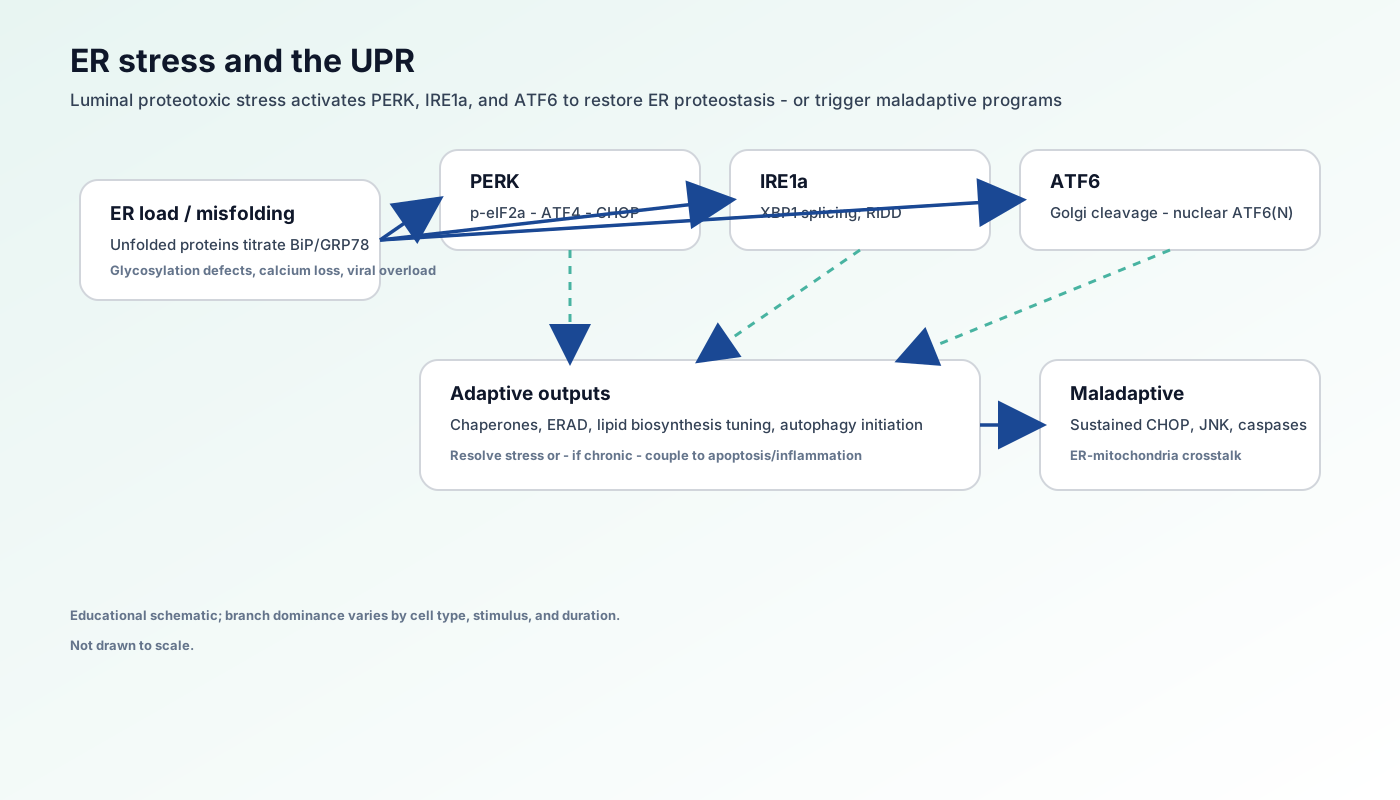
- Unfolded proteins titrate BiP off transmembrane sensors
- Parallel activation of PERK / IRE1α / ATF6
- Transcriptional/translational reprogramming to restore ER function
- Failure switches CHOP/caspase pro-apoptotic programs
8. Pathway biology overview
The UPR is a central adaptive response to proteotoxic ER stress, crosstalking with lipid metabolism, calcium signaling, and autophagy initiation. In cancer, the UPR can support secretory proteostasis yet be co-opted for survival under nutrient stress—interpret with secretory burden, genetics, and therapy context.
- IRE1α–JNK can couple to inflammasome/NF-κB programs
- PERK intersects mTOR/ISR under amino-acid limitation
9. Related pathways on this site
10. External databases & modification resources
11. References
UPR mechanisms
- • Walter P, Ron D. (2011). The unfolded protein response: from stress pathway to homeostatic regulation. Science. 334(6059):1081-6.
- • Hetz C, Papa FR, Glimcher LH. (2015). The unfolded protein response in immunity and inflammation. Nat Rev Immunol. 15(8):469-84.
Disease & therapeutic angles
- • Wang M, Kaufman RJ. (2014). Protein misfolding in the endoplasmic reticulum as a conduit to human disease. Nature. 529(7586):326-37.
- • Almanza A, et al. (2019). Endoplasmic reticulum stress signalling—from basic mechanisms to clinical applications. FEBS J. 286(2):241-278.