Unfolded protein response (UPR)
The unfolded protein response (UPR) is a conserved program triggered when misfolded proteins exceed ER folding capacity. PERK, IRE1α, and ATF6 coordinately reprogram translation initiation, RNA splicing/decay, and transcription to expand chaperones and ERAD—while unresolved stress can steer branches toward CHOP-driven apoptosis, stress granules, and inflammatory coupling.
1. Key targets
UPR sensors & three canonical arms
- PERK / EIF2AK3
Transmembrane kinase; phosphorylates eIF2α to attenuate global translation while favoring ATF4.
- IRE1α / ERN1
Kinase/RNase; splices XBP1 to XBP1s; RIDD degrades select ER-localized mRNAs.
- ATF6
Golgi proteolysis releases an active fragment upregulating chaperones and ERAD components.
Chaperones & folding QC
- BiP / GRP78(HSPA5);Calnexin / Calreticulin 糖蛋白折叠周期
- PDI family, ERdj co-chaperones, ERAD (e.g., SEL1L–HRD1)
Downstream transcription & fate
- ATF4、CHOP(DDIT3)、XBP1s 驱动的恢复或促凋亡程序
- Crosstalk with NF-κB, MAPK, autophagy (e.g., BECN1 context)
Supplement: UPR targets (gene symbols)
Shared sensors link to ER-stress gene pages; see modules below.
2. Suggested experimental readouts
For inducers (e.g., thapsigargin), titrate dose and time; for phospho-antibodies, pair totals and kinase-inhibitor controls.
- p-PERK, p-eIF2α (Ser51), total PERK / eIF2α
- XBP1s (RT-PCR or protein); IRE1α oligomerization / phospho (model-dependent)
- ATF4 and CHOP nuclear accumulation; cleaved ATF6(N) (shift/IF)
- BiP/GRP78 induction; ERAD gene panels (EDEM, HERPUD1, etc.)
- Caspase-3/7, PARP cleavage—pair with apoptosis endpoints
3. UPR branch comparison
| Arm | Sensor | Key outputs | Notes |
|---|---|---|---|
| PERK | EIF2AK3 | p-eIF2α → ATF4 → CHOP | ISRIB-class tools modulate integrated stress readouts. |
| IRE1α | ERN1 | XBP1s;RIDD | IRE1 RNase inhibitors for branch specificity. |
| ATF6 | ATF6(全长 ER 膜) | Golgi cleavage → nuclear transcription | Often parallels chaperone/ERAD induction. |
4. UPR in immunity, metabolism & cancer
- Immunity & inflammation: IRE1α–TRAF2–JNK links to NF-κB/NLRP3 programs; DC maturation and antigen presentation are tuned by UPR.
- Metabolic organs: PERK–ATF4 intersects amino-acid sensing and lipogenic programs; hepatic UPR crosstalks with insulin signaling.
- Tumor dependencies & therapy: Secretory/hypoxic tumors can co-opt XBP1s/ATF4 for proteostasis; PERK/IRE1 co-targeting with chemo/IO needs careful readout design.
Unfolded protein response (UPR)–related antibodies (curated)
5. Product lines & on-site search
Primary & phospho antibodies
GRP78/BiP, calnexin, PDI, PERK, p-PERK, p-eIF2α, ATF4, CHOP, IRE1α, XBP1, ATF6, caspase-3—WB/IHC/IF.
Tool compounds & inducers
Classical inducers (thapsigargin, tunicamycin, DTT) and PERK/IRE1 inhibitors—for research per datasheets/ethics.
6. Inhibitors & tool compounds (summary)
For research use; follow lab SOP, compound datasheets, and ethics approvals.
PERK kinase-domain inhibitor; probe PERK arm dependency.
ISR modulator; reframes p-eIF2α downstream readouts.
IRE1 RNase inhibitors; block XBP1 splicing.
ATF6-arm research tool (literature-dependent).
SERCA inhibitor; canonical ER calcium-depletion stressor.
N-linked glycosylation inhibitor; disrupts glycoprotein folding.
S1P-dependent ATF6 cleavage models (pathogenesis research).
IRE1 kinase inhibitor (distinct from RNase blockers).
7. Pathway schematic
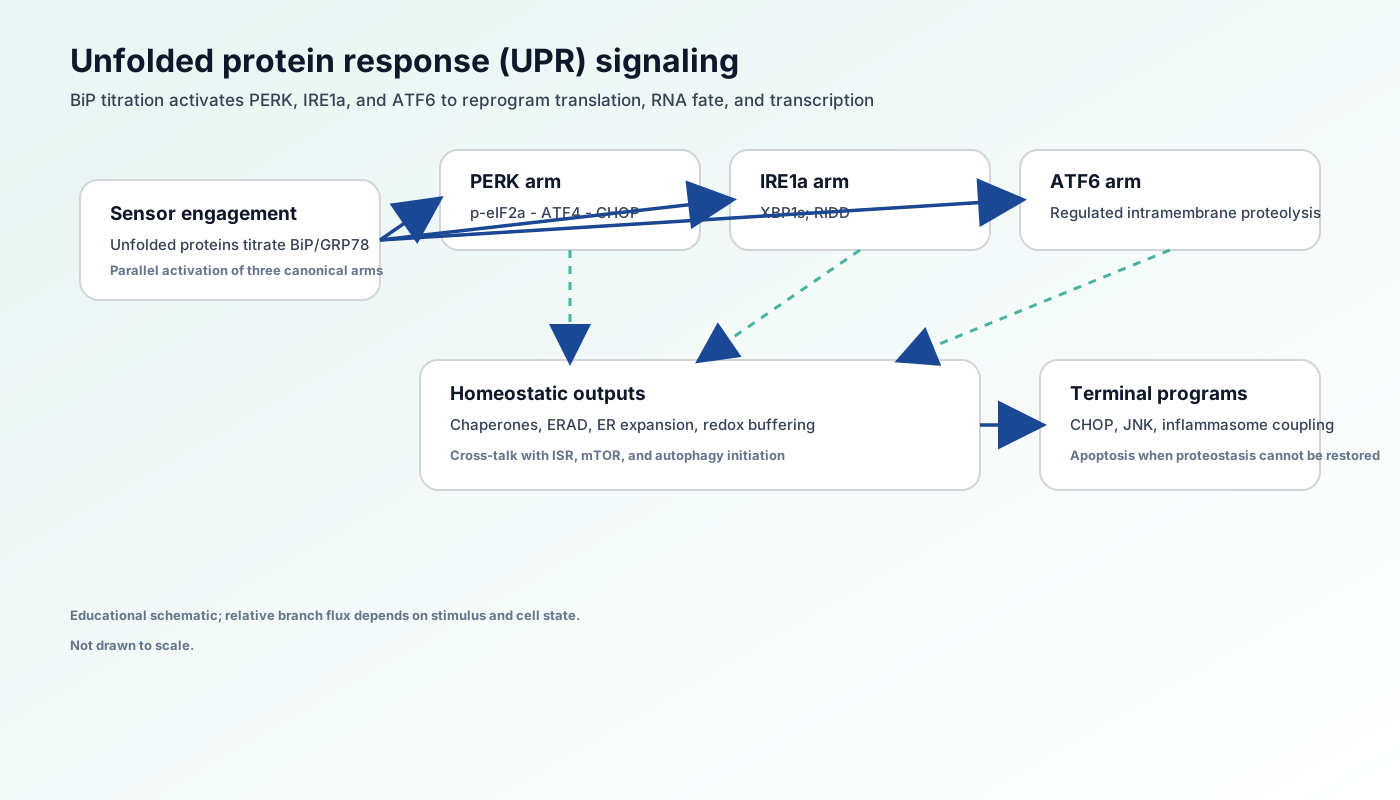
- Unfolded proteins titrate BiP off transmembrane sensors
- Parallel activation of PERK / IRE1α / ATF6
- Transcriptional/translational reprogramming to restore ER function
- Failure switches CHOP/caspase pro-apoptotic programs
8. Pathway biology overview
The UPR is fundamentally a tunable transcriptional/translational program: the same sensors can favor homeostatic repair acutely yet shift toward pro-inflammatory or pro-apoptotic outputs when branches are chronically imbalanced. It intersects the integrated stress response at eIF2α phosphorylation and co-decides cell fate with mTOR/AMPK nutrient sensing.
- IRE1α–JNK can couple to inflammasome/NF-κB programs
- PERK intersects mTOR/ISR under amino-acid limitation
9. Related pathways on this site
10. External databases & modification resources
11. References
UPR mechanisms
- • Walter P, Ron D. (2011). The unfolded protein response: from stress pathway to homeostatic regulation. Science. 334(6059):1081-6.
- • Hetz C, Papa FR, Glimcher LH. (2015). The unfolded protein response in immunity and inflammation. Nat Rev Immunol. 15(8):469-84.
Disease & therapeutic angles
- • Wang M, Kaufman RJ. (2014). Protein misfolding in the endoplasmic reticulum as a conduit to human disease. Nature. 529(7586):326-37.
- • Almanza A, et al. (2019). Endoplasmic reticulum stress signalling—from basic mechanisms to clinical applications. FEBS J. 286(2):241-278.